The Brains of the Operation: 3 Telltale Signs of a High-Quality Motor Controller
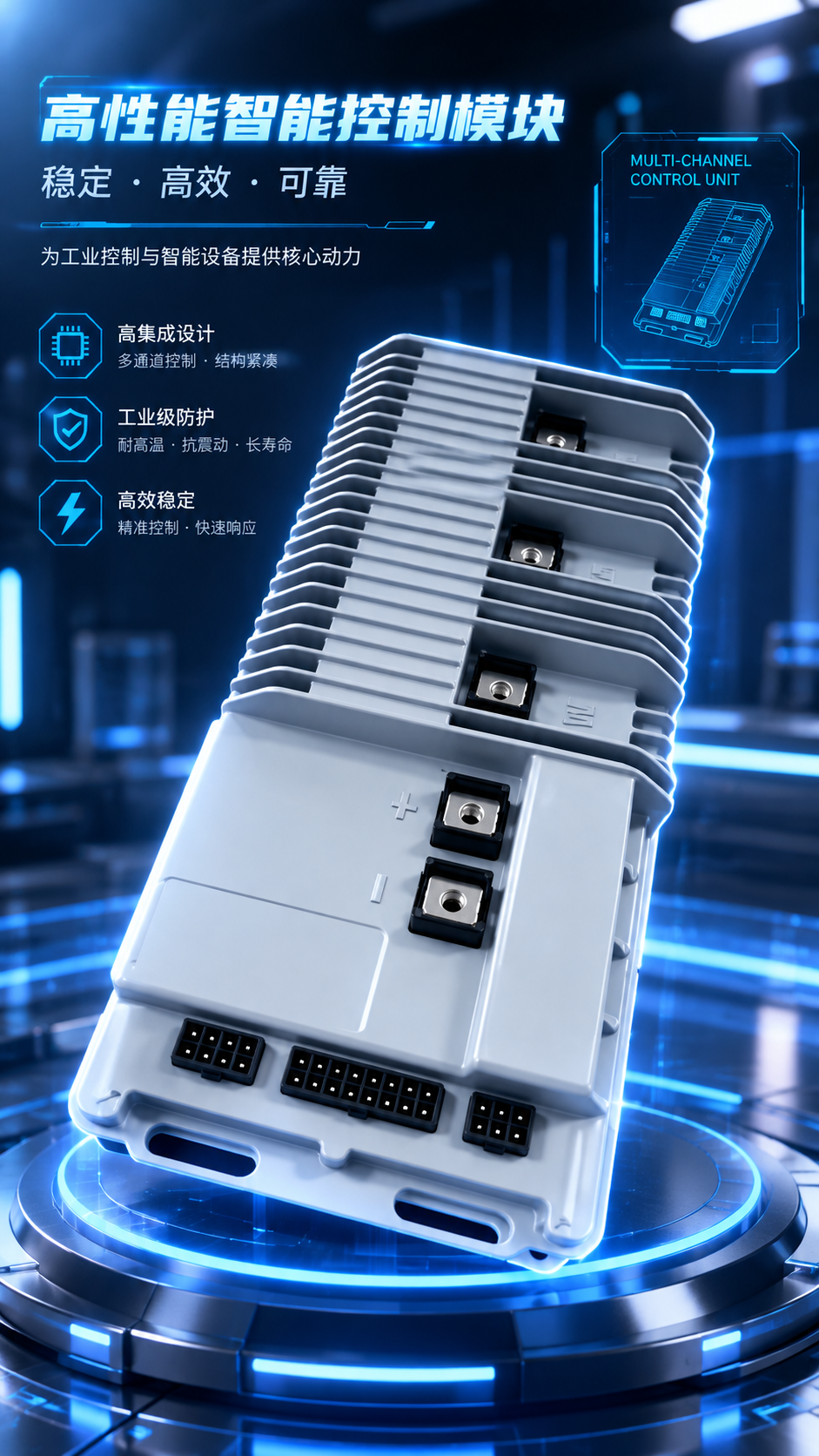
In any electric vehicle or project, the motor gets all the attention. It's the brawn, the part that delivers the thrilling speed and torque. But behind every great motor is a great controller—the brains of the operation. The controller is the sophisticated electronic device that takes your input (like twisting a throttle) and precisely delivers power from the battery to the motor.
A cheap, poorly made controller won't just give you jerky performance; it can fail catastrophically, leaving you stranded or even damaging your expensive motor. So, how can you spot a high-quality controller and avoid the duds?
Here are three critical areas to inspect to determine the true quality of a motor controller.
1. The Foundation: Look for Brand New Components (PCBs and ICs)
Before you even think about power ratings, take a look at the controller's core foundation: the Printed Circuit Board (PCB) and its Integrated Circuits (ICs).
**What you want:** A brand new, clean PCB with neat, shiny solder joints. The ICs (the small black chips on the board) should also be pristine and new. This indicates that the manufacturer uses a professional assembly line and quality-controlled components.
**What to avoid:** Any signs of recycled or refurbished parts. This is a massive red flag. Some low-cost manufacturers salvage ICs and other components from used electronics to cut costs. These parts have an unknown history, may have been exposed to stress or heat, and are far more likely to fail prematurely.
**How to check:** Open the controller case if possible. Look for a clean, green (or black, or blue) board. Are the solder points uniform and clean, or are they messy with leftover flux residue? Check the surfaces of the main ICs. If they are scratched, have faded markings, or show signs of being pried off another board, you are looking at a low-quality, unreliable product.
2. The Muscle: MOSFETs Determine the Real Current Capability
The most critical components for power handling in a controller are the MOSFETs (Metal-Oxide-Semiconductor Field-Effect Transistors). These are the electronic switches that rapidly turn on and off to regulate the flow of current to the motor.
**The Rule:** The number and quality of the MOSFETs directly determine the controller's true continuous current rating. A controller rated for high amperage must have the MOSFETs to back it up. More current requires more robust (or a greater number of) MOSFETs to share the electrical load and handle the heat.
**The Relationship:** The controller's current capability must match your motor. A small controller on a huge motor will burn out. Conversely, a massive controller on a tiny motor is overkill and inefficient. The amperage rating on the controller tells you what size motor it can safely and effectively power. A higher current rating means it can handle a larger, more powerful motor.
**How to check:** Look inside the controller. The MOSFETs are usually flat, black components with three legs, lined up and pressed against the aluminum case (the heatsink). A controller with a legitimate high-power rating will have a good number of these, or physically larger, higher-rated ones. Be wary of a tiny controller claiming a huge amperage rating—the physics just doesn't add up.
3. Keeping It Cool: The Importance of Heat Dissipation
Power electronics generate heat—a lot of it. The number one enemy of a motor controller is overheating. A controller's ability to get rid of this heat is a direct indicator of its quality and durability.
**The Principle:** The MOSFETs generate most of the heat. This heat must be efficiently transferred away from them and into the surrounding air. The controller's aluminum case is not just for protection; it is a vital heatsink.
**What to look for:** The efficiency of heat transfer depends on the contact between the MOSFETs and the aluminum heatsink. In a high-quality controller, the MOSFETs will be mounted flush against a flat, smooth surface inside the case, with a layer of thermal paste or a thermal pad between them. A larger contact area provides a better pathway for heat to escape.
**How to check:** Observe how the MOSFETs are mounted. Is there a clean, tight connection to the aluminum case? Is there evidence of thermal paste (a white or grey paste)? A poor design will have gaps, an uneven mounting surface, or no thermal interface material at all. Furthermore, a good controller case will often have external fins to increase its surface area, allowing it to radiate heat into the air more effectively. A thick, finned case is a great sign of a well-designed product.
Conclusion
A motor controller is a classic case of "you get what you pay for." A cheap controller cuts corners on the very things that ensure reliability and safety: the quality of its components, its true power-handling capability, and its ability to manage heat.
By examining the cleanliness of the internal components, the robustness of the MOSFETs, and the effectiveness of the heatsink design, you can make a much more informed decision. Investing in a high-quality controller is investing in the performance, safety, and longevity of your entire electric vehicle.
Need Help Choosing the Right Configuration?
Every market has unique requirements. Contact us for a free consultation tailored to your country's conditions.
Get in Touch